

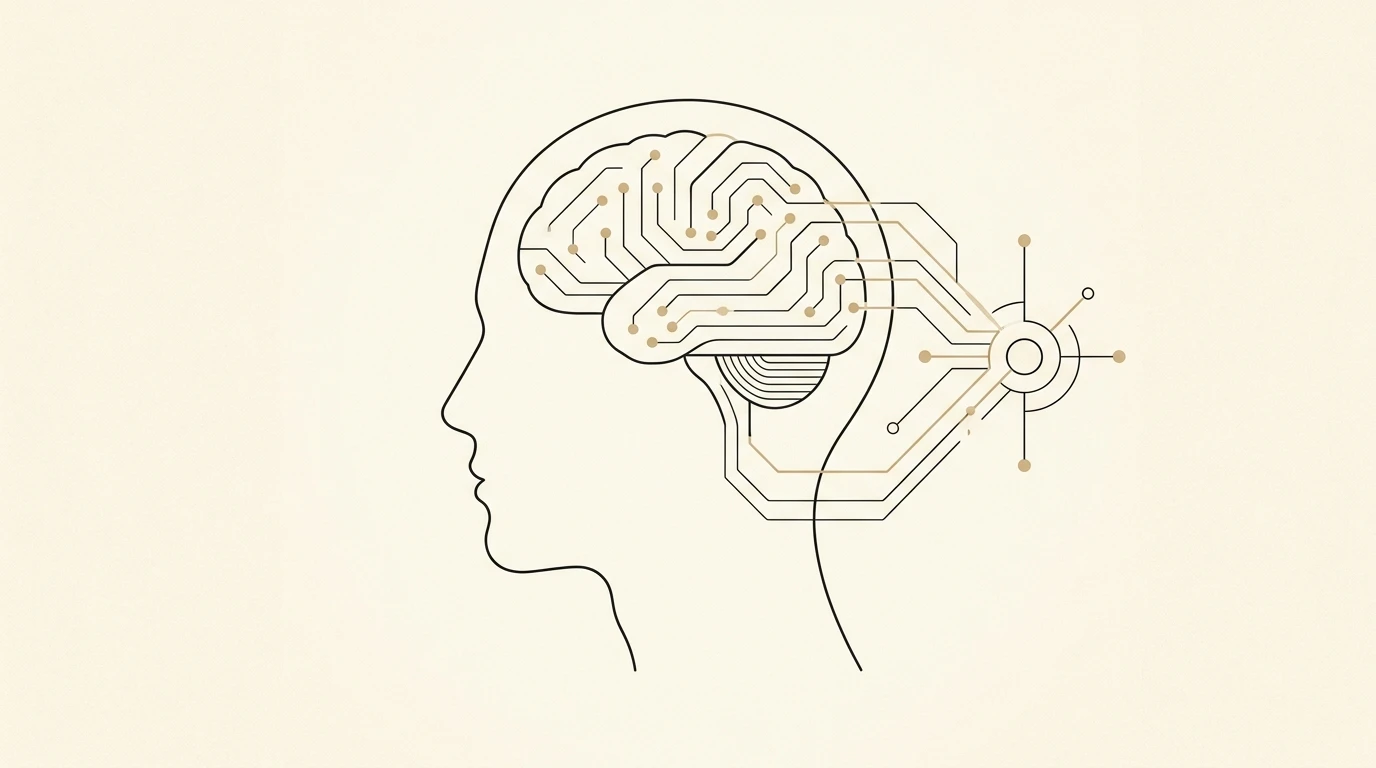
For decades, our relationship with technology was relatively simple.
The distance between the human and the machine was obvious.
But that distance is disappearing.
First came computers.
Then smartphones.
Then smartwatches, earbuds, fitness trackers and wearable sensors.
Now we are moving toward technologies that don't just sit on the body, but interact directly with it — including implanted medical devices and brain-computer interfaces.
Companies and research groups are working toward systems capable of recording neural activity, interpreting signals and, in some applications, stimulating the nervous system.
The potential is enormous.
- People who have lost the ability to move could potentially control computers through neural signals.
- People with severe neurological conditions may benefit from targeted stimulation.
- Assistive technologies could become dramatically more natural.
- And perhaps one day, the boundary between biological intelligence and digital systems may become far less obvious.
But there is a question I think we should ask before celebrating that future:
The Foundational Question
What happens when the technology solving the problem becomes part of the biological system it is trying to improve?
We are very good at asking: “Can we build it?”
Technology has always been driven by this question.
Engineering is exceptionally good at turning these questions into products.
But when technology enters the human body, another question becomes equally important:
What happens after we build it?
Not after six months.
Not after the product launch.
Because the human body is not another hardware platform.
And the brain is not a static circuit board.
It is a living, adaptive biological system.
That makes the engineering problem fundamentally different.
The radiation question
This is where conversations around wireless and implanted technology often become confusing.
People hear that an electronic device produces electromagnetic fields and immediately ask:
“Will it interfere with the brain's natural frequency?”
The concern is understandable.
But the science is more complicated than the phrase “brain frequency” suggests.
The brain doesn't operate at one single frequency.
Neural activity contains multiple oscillatory patterns, commonly described using bands such as delta, theta, alpha, beta and gamma. These emerge from complex interactions between neurons and neural networks.
So an electronic device transmitting or receiving electromagnetic energy isn't automatically “changing the brain's frequency.”
And we should distinguish between very different technologies.
A wireless communication system may use radiofrequency electromagnetic fields to transmit information.
A neural stimulation device may deliberately deliver electrical or magnetic stimulation to influence neural activity.
Those are not the same mechanism.
Current evidence does not establish that RF exposure within established safety limits causes changes to normal brain function, although research continues and uncertainty remains around some newer technologies and long-term questions.
So the responsible conclusion isn't:
“Electromagnetic radiation will change your brain.”
Nor is it:
“There is absolutely nothing to worry about.”
The more accurate position is:
Different forms of electromagnetic exposure have different biological mechanisms, and the evidence depends on frequency, intensity, duration, distance, device design and the biological tissue involved.
That distinction matters.
But there is a more interesting problem than radiation
The machine doesn't have to alter your brain's “frequency” to interact with your biology.
A neural interface can interact with neural tissue through electrical signals.
That is a fundamentally different question.
And medicine already uses technologies that intentionally influence neural activity.
Deep brain stimulation, for example, uses implanted electrodes to deliver stimulation to specific areas of the brain.
The FDA identifies several categories of risk associated with active neurological implants, including implantation-related risks, stimulation-related adverse effects, imaging-related risks and electromagnetic interference.
In other words:
Humanity is already deliberately interacting with the nervous system using technology.
The debate therefore shouldn't be:
“Should technology ever interfere with the brain?”
We already know the answer to that.
The more important question is:
“How much intervention is appropriate, for whom, for what purpose, and for how long?”
The problem nobody sees in the product demo
Imagine a future product demonstration.
A person sits in front of a computer.
They think about moving a cursor.
The cursor moves.
It looks magical.
And it is an extraordinary engineering achievement.
But a product demo shows us the moment the technology works.
It doesn't show us the next 20 years.
And perhaps the strangest question:
What happens when a product cannot simply be uninstalled?
That is where conventional product thinking starts to break.
Your body is now part of the product environment
For a smartphone, overheating is annoying.
For an implanted neural device, heat can become a biological engineering problem.
Implanted brain-machine interfaces consume energy, and some of that energy becomes heat that must be dissipated through surrounding tissue. Researchers therefore treat thermal management as an important design constraint.
This is a fascinating shift.
A normal electronic product asks:
“How do we keep the device cool?”
An implanted device may need to ask:
“How do we keep the surrounding human tissue within safe physiological limits?”
The difference is enormous.
The environment is no longer air.
It is biology.
And biology adapts
This may be an even deeper issue.
When we use a smartphone every day, our brain adapts to the interface.
Now imagine a technology that doesn't merely require your brain to learn an interface.
Imagine one that continuously interacts with neural signals.
The question becomes:
Does the brain adapt to the device?
Neuroplasticity tells us that the nervous system is capable of changing with experience, learning and stimulation.
That isn't inherently good or bad.
In fact, neuroplasticity is one reason neurological rehabilitation and stimulation technologies can be useful.
But it creates a fascinating long-term product question:
“If a machine becomes part of the neural feedback loop, does the human eventually adapt to the machine as much as the machine adapts to the human?”
That is a question worth studying rather than assuming.
The ancient question hidden inside the new technology
There is an interesting reason this conversation feels bigger than engineering.
The technology may be new.
The underlying question isn't.
Indian philosophy has spent a great deal of time asking questions about action, intention, self-control and the relationship between knowledge and action.
The Bhagavad Gita is one of the clearest examples.
Arjuna is not asking Krishna how to build a better weapon.
He is facing a much more fundamental problem:
“How should I act when the consequences of my action are enormous?”
Krishna responds not by simply making the decision for him, but by giving him a framework through which he can understand action, duty, knowledge and responsibility.
That distinction becomes surprisingly relevant when we think about the future of neural technology.
Today, the relationship looks roughly like this:
You think.
You move your hand.
You click.
The machine responds.
A neural interface attempts to shorten that chain:
And as AI becomes involved, the system could become even more sophisticated.
The technological achievement would be extraordinary.
But it creates a philosophical problem:
The Philosophical Threshold
At what point does assistance begin to influence agency?
There is a profound difference between:
“The machine helps me do what I decided.”
“The machine helps decide what I should do.”
That distinction is easy to overlook when we focus entirely on accuracy, latency and convenience.
And this is where the ancient question becomes useful.
The lesson isn't that an ancient text somehow predicted brain-computer interfaces.
It didn't need to.
The value of the Gita here is that it gives us a vocabulary for a problem that technology is making increasingly concrete:
Knowledge can influence action without necessarily owning the action.
That may become one of the most important design principles for future human-machine systems.
A neural interface should ideally make a person's intention more capable of becoming action.
Not make the machine's intention indistinguishable from the person's.
Because the ultimate goal of human-centered technology shouldn't simply be:
“Make the machine more powerful.”
It should be:
“Make the human more capable without quietly taking away the human's agency.”
And perhaps that is where an ancient philosophical question becomes relevant to one of the newest technological frontiers.
Not because the past predicted the future.
But because the technology changed while the question remained.
The real innovation challenge
This is where I think the conversation about future technology needs to change.
We often evaluate innovation using metrics such as:
But when technology becomes physically integrated with the human body, we need additional metrics.
Reversible
Can the intervention be undone?
Repairable
What happens if the hardware fails?
Upgradable
Can it evolve without requiring increasingly invasive procedures?
Safe over decades
Not just during clinical trials, but across the expected lifetime of the user.
Interoperable
What happens if the original manufacturer disappears?
Transparent
Does the user understand what the system is doing?
Independent
Can the person function without the technology?
Secure
What happens if the system is hacked, manipulated or compromised?
These aren't merely technical questions.
The strangest product requirement: “Don't become indispensable”
There is something fundamentally different about an implanted technology.
But if an implanted system becomes deeply integrated into someone's life, the switching cost can be dramatically different.
The product isn't just competing for attention anymore.
It is becoming part of someone's physical infrastructure.
That creates a new form of product responsibility.
Perhaps the future equivalent of:
“Don't make the product addictive.”
will become:
“Don't make the human dependent on a system that they cannot meaningfully control.”
That doesn't mean implanted technology should not exist.
It means the design philosophy has to evolve.
The future may not be human vs. machine
We often frame the future as:
Human vs. Machine.
But that framing may become less useful.
The future may instead be about:
Human + Machine.
And once that happens, our definition of a product changes.
A product isn't simply something you purchase.
It can become something your body interacts with continuously.
That means the responsibility of the builder changes too.
The next frontier isn't just AI
We spend enormous amounts of time asking what happens when AI becomes more intelligent.
Perhaps we should also ask:
What happens when AI becomes more physically connected to us?
Today, AI observes inputs through cameras, microphones, keyboards and sensors.
Tomorrow, AI could potentially receive richer biological signals.
Further ahead, neural interfaces could create increasingly direct channels between biological systems and digital systems.
That changes the nature of the product.
The interface is no longer:
It could become:
The screen becomes optional.
The keyboard becomes optional.
The mouse becomes optional.
Perhaps eventually, even conventional interfaces become optional.
And that raises a profound design question:
“When the interface disappears, where does the product end and the human begin?”
Maybe we are measuring the wrong thing
Perhaps the biggest mistake would be to ask only:
“Is this technology safe?”
Safety matters enormously.
But safety is only the first layer.
We should also ask:
And most importantly:
Are we designing technology around the human — or slowly designing humans around the technology?
This isn't an argument against innovation
The potential benefits of neurotechnology are too significant to dismiss.
For someone who cannot move a limb, controlling a computer through neural signals isn't a philosophical experiment.
It could represent independence.
For someone with a severe neurological disorder, stimulation isn't simply “technology interfering with the brain.”
It can be treatment.
For someone who has lost a sensory or motor capability, a neural interface could eventually provide a new way to interact with the world.
That is why this conversation needs nuance.
The goal shouldn't be to stop technology from getting closer to us.
The goal should be to understand what responsibility looks like when it does.
So, should we be afraid?
I don't think fear is the useful question.
Neither is blind excitement.
The useful question is:
“Are we asking enough questions before the technology becomes impossible to separate from us?”
We should build.
We should research.
We should test.
We should treat people who can benefit from these technologies.
We should continue exploring what the human brain and technology can accomplish together.
But we should also become better at thinking beyond the product launch.
Because when the product is outside your body, a bad design can usually be replaced.
When the product is inside your body, the definition of “replaceable” changes.
And perhaps that is the most important product-design challenge of the next technological era.
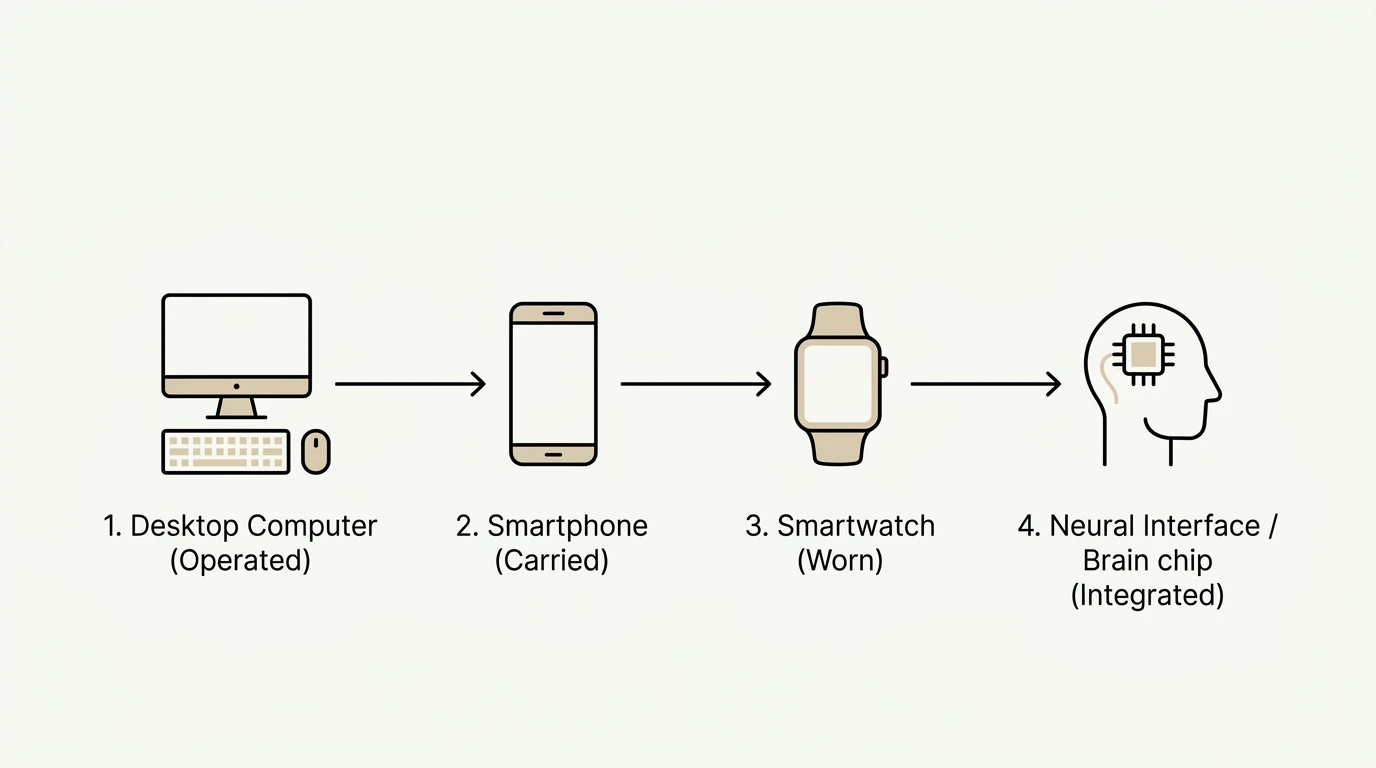
Figure 1: From external tools we operated to intimate systems we integrate into our biological tissue.
Technology used to be something we operated.
The closer technology gets to the human body, the more important it becomes to understand not only what the machine can do to the human, but also what long-term interaction with the machine may do to the human–technology relationship.
Perhaps the future isn't about building technology that gets as close to humans as possible.
Perhaps it's about knowing exactly how close it should get.
And maybe that is the lesson hidden in an ancient philosophical tradition.
The question has never been only how much power we can acquire.
The real question is whether our wisdom can keep pace with it.
The Final Takeaway
“Because the closer technology gets to the human, the more important it becomes that we don't lose our ability to understand ourselves.”